

Counter Surfing: Why Your Dog Keeps Stealing Food
By Debbie VanStory | Professional Dog Trainer | K9 Journey Dog Training™ | Temecula, CA

A Note from Debbie
Every dog and every family is different. The information in this article is based on my experience working with dogs and their owners through private training sessions in Temecula. My goal is to help you better understand your dog, improve communication, and build a stronger relationship through training, consistency, and play.
Ten Seconds Is All It Takes For a Counter Surfing Dog
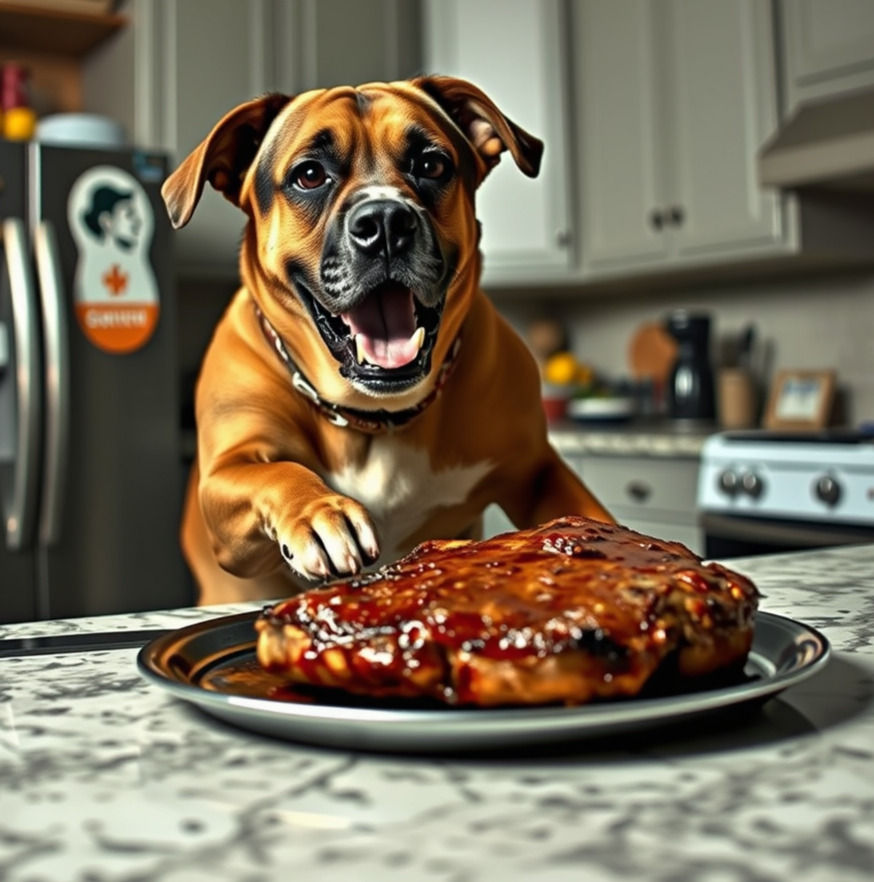
You set a plate down to answer the door. You turn around to grab a napkin. You step away for one phone call. And in that tiny window, your dog has already been up on the counter and back down, food gone, evidence eaten.
Counter surfing is one of those behaviors owners often describe as their dog being sneaky or spiteful, but that's not really what's happening. Your dog isn't plotting. They're doing what has worked for them before, and in most households, it has worked more than once.
Why Counter Surfing Keeps Happening
It Pays Off Almost Every Time
This is the core of the problem. Counter surfing is what's called a self-rewarding behavior. Your dog doesn't need you to praise them or give them a treat for it to be worth repeating. The food itself is the reward, and it happens instantly, every single time they succeed. Even if you catch them nine times out of ten, that one successful grab is often enough to keep the behavior alive.
Dogs Learn Exactly When It's Safe
Dogs are excellent at reading patterns. If counter surfing only gets interrupted when you're in the room, your dog quickly learns the real rule isn't "don't counter surf," it's "don't counter surf while being watched." That's why so many owners say their dog never does it in front of them but somehow the food still disappears.
The Environment Is Set Up for It
Counters at nose or paw height for a lot of dogs, especially larger breeds, are essentially an open invitation. If food, wrappers, or dishes are regularly left within reach, you're not dealing with a training problem alone. You're dealing with an environment that makes the unwanted behavior easy and rewarding.
It Can Be a Sign of Under-Stimulation
Dogs who spend a lot of time bored or under-exercised often turn to scavenging as their own form of entertainment. It's not just about hunger. It can be about having nothing better to do.
From Debbie's Training Sessions
I worked with a family whose young retriever had figured out exactly how to time his counter raids around their dinner routine. He never touched anything while they were eating at the table, but the moment they got up to clear plates, food started disappearing off the counter. The fix wasn't just about teaching "off." It was about giving him a specific job during that transition, going to a mat and staying there while the kitchen was being cleaned up, and making that job more rewarding than the gamble of jumping up. Within two weeks, he was choosing the mat on his own.
What Actually Fixes Counter Surfing
The fastest win, and the one most owners can do today, is environmental: keep counters clear when you're not actively training, use the back burners, and push plates and cutting boards away from the edge. You genuinely can't train a behavior out of a dog while it's still being rewarded every day, so this step comes first, before any formal training even starts.
The training piece itself is less about correcting the jump and more about building your dog a different, more rewarding job during the exact moments counter surfing tends to happen, like meal prep or cleanup. That sounds straightforward, but it depends a lot on timing, how you introduce real food temptation without letting your dog rehearse the old habit, and how you keep the whole household consistent, since a habit reinforced by even one family member on one occasion can undo weeks of progress. That's usually the part that benefits most from working through it with a trainer in real time, rather than trial and error at home.
If the scavenging seems tied to boredom as much as opportunity, more structured exercise, training sessions, and enrichment like puzzle feeders can take some of the edge off the underlying drive, even before the specific habit is fully retrained. Manage the dog's freedom as well so your dog is not able to access the common space that the counter surfing accurs at.
FAQ
My dog only does this when I'm not home. How do I train that? Start with supervised practice using low-value food to build the habit while you can reward and redirect. As the skill gets stronger, combine it with environmental management, like keeping counters clear, so the behavior has fewer chances to be rewarded when you're away.
Is counter surfing more common in certain breeds? Larger breeds and dogs with a strong food drive tend to counter surf more simply because they have easier physical access and a stronger motivation, but any dog can develop the habit if it's been rewarded.
Should I punish my dog for counter surfing? Punishment after the fact doesn't work well here because the behavior already paid off before you found out. It's far more effective to manage the environment and teach a clear alternative behavior than to try to catch and correct every instance.
How long does it usually take to fix? With consistent management and training, most owners see a real change within two to three weeks, though dogs with a long-established habit may take a bit longer.
Final Thoughts
At K9 Journey Dog Training™, I believe training is about more than teaching commands or stopping unwanted behaviors. It is about building communication, trust, and a relationship where your dog understands what you are asking and enjoys learning with you. A well-trained dog is not just obedient—they are confident, connected, and able to enjoy life with their family.
Counter surfing isn't about a dog trying to outsmart you. It's about a behavior that's been quietly working in their favor. Once you remove the easy wins and give your dog a clear, rewarding job to do instead, the counter stops being worth the gamble.
Continue Learning
Understanding your dog's behavior is a journey, and each topic builds on the next. Here are a few more articles that may help you better understand your dog and strengthen your training.
If you're looking for personalized, relationship-based dog training in Temecula, I'd love to help. K9 Journey Dog Training™ offers private, one-on-one training designed to build confidence, improve communication, and create lasting results for you and your dog.
Call /Text - 714-361-9348 or email info@K9Journey.com
Debbie VanStory is a Professional Dog Trainer and founder of K9 Journey Dog Training™ in Temecula, CA 92592. She uses balanced training methods to help dogs of all breeds and ages build confidence, improve behavior, and strengthen the bond with their owners through private, in-home one-on-one sessions.


Comments